 Gift Certificates
 New Arrivals

Why Every Pond Benefits From Both A Waterfall & Aeration System
When you picture aeration in a pond, the first thing that might come to mind is your waterfall. After all, waterfalls look beautiful, create movement, and add oxygen at the surface of the water. But are they enough to fully aerate your pond?
The truth is, waterfalls and bottom-diffused aeration systems serve different purposes. While waterfalls provide surface oxygenation, they don’t always deliver circulation where your pond needs it most — in the deeper zones. That’s where a dedicated pond aeration system comes in.
In this guide, we’ll break down how waterfalls and aeration work, why both matter, and how aeration supports your pond in every season.
Why Aeration is Essential for Pond Health
Every pond ecosystem depends on dissolved oxygen. Fish, aquatic plants, and beneficial bacteria all require oxygen to survive and thrive. When oxygen levels are low, your pond’s balance suffers.
Without proper circulation and oxygen:
- Fish become stressed, leading to illness or even die-offs.
- Beneficial bacteria can’t break down waste efficiently.
- Sludge and organic debris build up at the bottom of the pond.
- Nutrient levels spike, fueling algae blooms.
Aeration solves these problems by moving water and infusing oxygen throughout the pond — not just at the surface.
See our Pond Aeration Kits to explore options for different pond sizes and depths.
What a Waterfall Provides
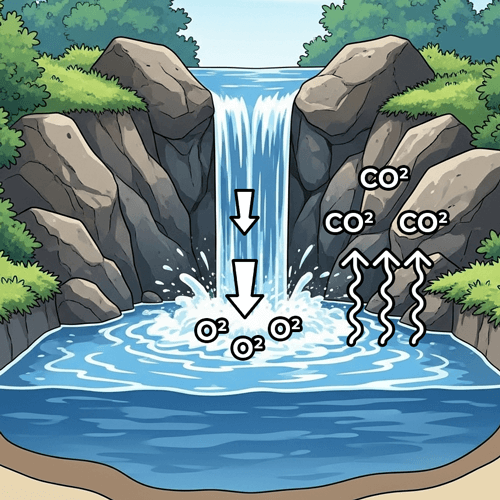
Waterfalls are more than decorative. They create surface-level aeration by increasing gas exchange — oxygen enters the water as it splashes down, while carbon dioxide and other gases are released.
This is beneficial, but it comes with limitations:
- Waterfalls primarily affect the top layer of your pond.
- Oxygen doesn’t always reach the bottom, where fish rest and organic debris accumulate.
- If you turn off your waterfall during certain times of year, your pond loses its main source of circulation.
Waterfalls are valuable, but they can’t always do the heavy lifting alone.
Thinking about upgrading your water feature? Take a look at our Pondless Waterfall Kits for inspiration.
How Aeration Systems Work
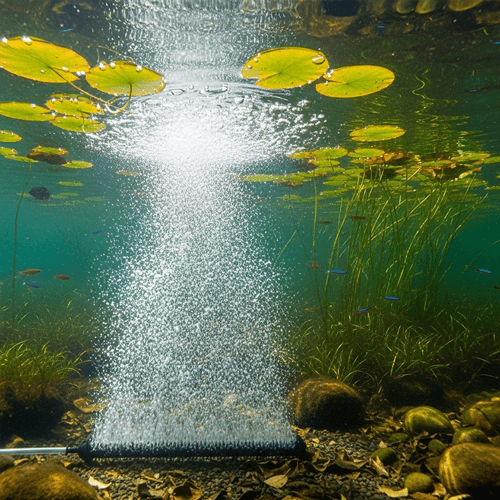
A pond aeration system uses an air pump, airline tubing, and diffusers to push bubbles from the bottom upward. As the bubbles rise, they circulate and oxygenate the entire water column.
This process provides several benefits:
- Deep-water oxygenation where fish spend much of their time.
- Reduction of “dead zones” where sludge and toxic gases accumulate.
- Better support for beneficial bacteria, which thrive in oxygen-rich environments.
- Improved water clarity and reduced algae growth.
In short: waterfalls provide the surface solution, aeration systems provide the deep solution. Together, they create a stable, healthy ecosystem.
Aeration Benefits in Every Season
One of the most common misconceptions is that aeration is only necessary in certain climates or during winter. The reality is that ponds benefit from aeration year-round, regardless of location.
Warm Weather
- Warmer water holds less oxygen.
- Fish are more active and consume more oxygen.
- Aeration prevents oxygen crashes, reduces algae growth, and keeps water clear.
Cooler Weather
- Leaves, plants, and other organics break down, releasing gases that can be harmful to fish.
- Aeration keeps oxygen levels stable and supports bacteria that process waste.
- Even if your pond never freezes, circulation keeps your ecosystem balanced.
Winter Conditions
- In freezing climates, aeration maintains a small open area in the ice, allowing for gas exchange.
- This prevents harmful gases from becoming trapped under the surface, protecting your fish.
No matter your region, aeration is a smart long-term investment in pond health.
Pairing aeration with beneficial bacteria treatments further supports water clarity and balance.
Placement Tips for Aeration Systems
To get the most from your aeration kit, diffuser placement matters.
- During warmer months: place diffusers deeper to circulate the entire pond from bottom to top.
- During cooler months: shift diffusers to shallower areas so fish can remain in deeper, more stable zones without being disturbed, while oxygen exchange continues near the surface.
Waterfalls + Aeration = The Ideal Combination
So, do waterfalls provide enough aeration on their own? There are many variables, but the short answer is: not usually.
Waterfalls add oxygen at the surface, but they rarely circulate oxygen throughout the entire pond. Aeration systems fill in the gaps by moving oxygen into deeper zones, preventing dead spots, and keeping your ecosystem balanced.
When used together, waterfalls and aeration create the healthiest possible pond environment:
- Clearer water.
- Happier, healthier fish.
- Reduced algae growth.
- Less sludge buildup and easier maintenance.
It’s not an either/or choice — the best approach is to have both working in harmony.
Choosing the Right Aeration System
The right aeration kit depends on your pond’s size, depth, and shape.
- Small ponds (<2,000 gallons): compact kits with one or two diffusers are often enough.
- Medium ponds (2,000–6,000 gallons): multi-diffuser kits provide more complete circulation.
- Large ponds (>6,000 gallons): higher-output compressors and multiple diffuser plates are required for full coverage.
If your pond has an irregular shape or multiple levels, you may need a kit with several diffuser plates to ensure circulation throughout.
Shop our complete selection of Pond Aeration Kits.
Don’t forget ongoing care: see our Aeration Maintenance Kits & Parts to keep your system working at peak efficiency.
Supporting Pond Health Beyond Aeration
Aeration is the backbone of a healthy pond, but it works best as part of a larger care strategy:
- Add beneficial bacteria to break down organic waste and sequester excess nutrients.
- Monitor your fish and provide proper fish care products to keep them thriving.
By combining aeration with good pond management, you’ll enjoy clear water, healthier fish, and fewer maintenance headaches.
Final Thoughts
While waterfalls add beauty and surface aeration, they can’t fully replace a dedicated aeration system. Aeration provides the deep circulation your pond needs — supporting fish, bacteria, and overall water quality in every season.
The best approach isn’t to choose one over the other, but to use them together. Waterfalls create movement and oxygen at the surface, while aeration kits keep oxygen flowing throughout the entire pond.
Whether you live in a warm climate or an area that experiences freezing winters, investing in aeration is one of the smartest decisions you can make for your pond’s long-term health.
Shop our Pond Aeration Kits at Webb’s Water Gardens | Browse Aeration Maintenance Kits & Replacement Parts
FAQ
Do waterfalls provide enough aeration for a pond?
Waterfalls add oxygen at the surface but rarely circulate oxygen into deeper water zones. A dedicated aeration system ensures oxygen is distributed throughout the entire pond.
Where should I place my pond aeration diffuser?
In warm months, place diffusers deeper to circulate the entire pond. In cooler months, move them to shallower areas so fish can rest in deeper, stable water.
Do I still need aeration if I run my waterfall year-round?
Yes. Waterfalls aerate surface water, but aeration systems circulate oxygen into deeper areas where fish and beneficial bacteria need it most.