 Gift Certificates
 New Arrivals
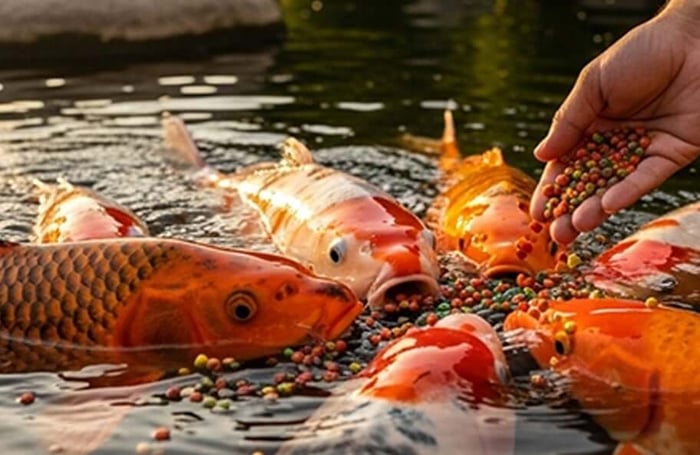
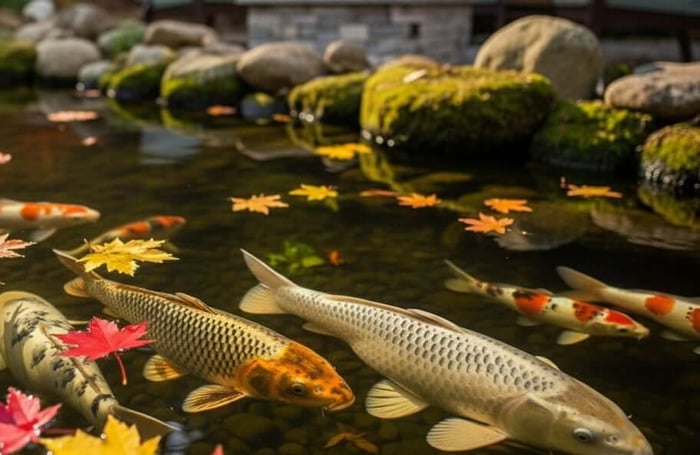
Feeding your koi and pond fish isn’t just a daily task — it’s one of the most important things you can do to support their health, growth, and water quality. The right fish food at the right time influences growth, coloration, immune system strength, and even water clarity.
What works for young koi in July may not be right for mature fish in October. Your feeding strategy should change based on fish age, season, and water temperature.
This guide covers everything you need to know:
- Types of koi and pond fish foods
- Feeding by age and life stage
- Seasonal feeding strategies based upon water temperature
- Storage tips and common mistakes
- Quick reference chart for every season
Types of Fish Food
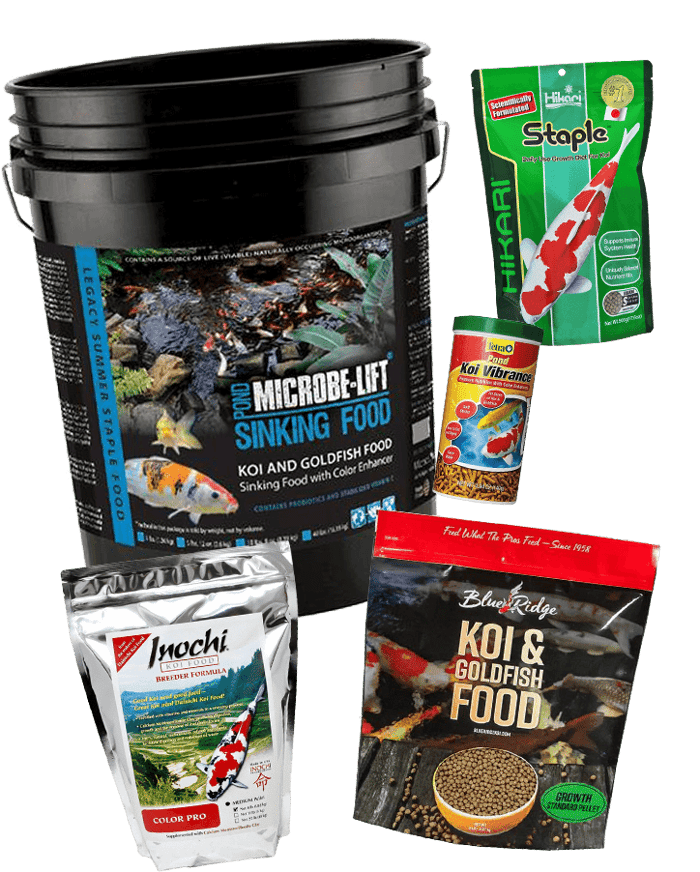
Staple Fish Foods
- Everyday nutrition for koi and goldfish.
- Balanced proteins, fats, and vitamins.
- Suitable for temperatures above 60°F.
Growth Fish Foods
- Higher protein levels for rapid development.
- Best for young koi or when temperatures are above 70°F.
- Encourages size gains and strong muscle growth.
Color-Enhancing Fish Foods
- Formulated with carotenoids like spirulina and krill.
- Brightens natural pigmentation, especially reds and oranges.
- Works best during summer when metabolism is high.
Did You Know? Carotenoids in color-enhancing fish foods are absorbed into a fish’s skin cells, creating richer, more vibrant coloration.Wheat Germ Fish Foods
- Easily digested, even when metabolism slows.
- Crucial in cooler water temperatures between 40 and 60 degrees.
- Provides energy reserves for overwintering.
Specialty Fish Foods
- Probiotic blends for specific needs.
- Higher fat formulas to build reserves before winter.
Feeding by Fish Age
- Young Koi (0–2 years): Require high-protein diets to support rapid growth during warm water temperatures. Offer smaller meals several times a day.
- Mature Koi (2–6 years): Thrive on a balanced diet of staple and growth foods. Use color-enhancing formulas in summer to maximize vibrant pigmentation.
- Older Koi (7+ years): Slower digestion requires easily digestible foods, such as wheat germ, to reduce stress and support overall health.
Feeding by Season
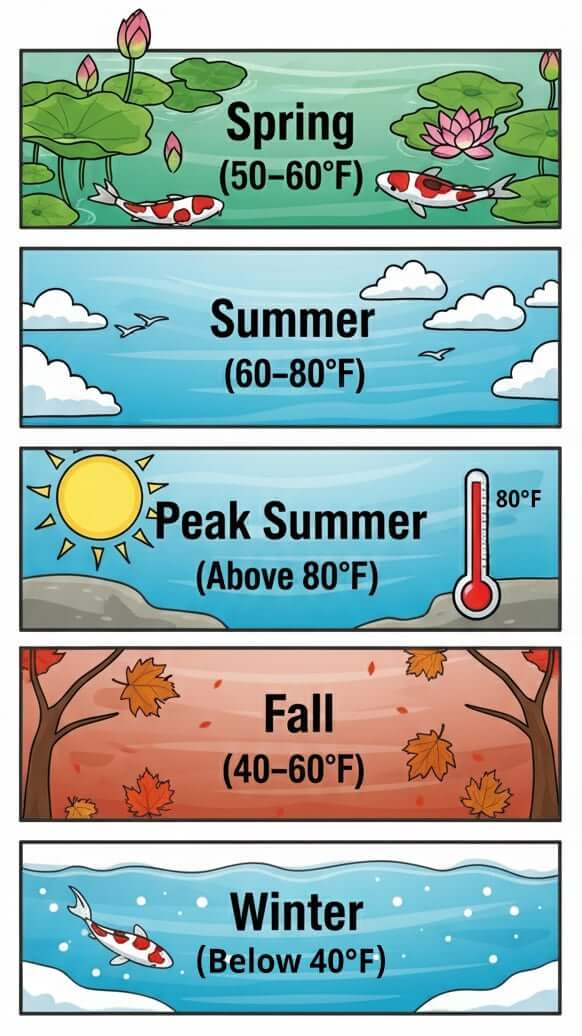
Always water temperature (not the calendar) should guide your feeding schedule:
Spring (50–60°F):
- Begin feeding lightly after winter dormancy.
- Start with wheat germ fish foods for gentle digestion.
- Increase feeding as temps stabilize above 60°F.
Summer (60–80°F):
- Peak metabolism and growth.
- High-protein growth fish foods and color-enhancing fish foods.
- Feed multiple small meals per day.
Peak Summer (Above 80°F+):
- Wheat germ foods or reduce feeding.
- If water temps reach 80°F+, stop feeding altogether.
Fall (40–60°F):
- Wheat germ fish foods become essential as metabolism slows.
- Begin mixing wheat germ with summer food once water dips below 60°F.
- Transition gradually for 1–2 weeks.
- Stop feeding completely when water temperatures are consistently below 40°F.
- ✔ Monitor water temps daily.
- ✔ Transition at 60/55°F.
- ✔ Stop feeding at 40°F.
Winter (Below 40°F):
- Fish enter a hibernation-like state (Torpor).
- Do not feed — they cannot digest food in these temperatures.
- Feeding during winter risks illness and water quality problems.
Feeding by Water Temperature
| Water Temp | Feeding Frequency | Best Food Types |
|---|---|---|
| Above 70°F | 2–4 times daily | Growth Fish Foods, Color-Enhancing Fish Foods |
| 60–70°F | 1–2 times daily | Staple Fish Foods + Wheat Germ Fish Foods |
| 40–60°F | Every other day | Wheat Germ Fish Foods |
| Below 40°F | Do not feed | None |
Storage Tips & Common Mistakes
- Store Smart: Keep food in a cool, dry place with sealed packaging.
- Buy in Moderation: Only purchase what you’ll use in 12 months. Nutrients degrade over time.
- Avoid Overfeeding: Uneaten food pollutes the water and stresses fish.
- Clean Up: Always remove leftovers from the pond.
Quick Reference Feeding Chart
- Spring: Start light, feed wheat germ fish foods as water warms.
- Summer: High-protein growth and color-enhancing fish foods, multiple meals.
- Fall: Transition to wheat germ fish foods, stop feeding at 40°F.
- Winter: No feeding below 40°F.
Final Thoughts
Feeding koi and pond fish correctly means more than keeping them alive — it helps them thrive. From rapid summer growth to careful fall transitions, the right food at the right time supports health, color, and water quality.
Ready to stock up? Browse our full collection of Koi & Pond Fish Food and keep your pond healthy in every season.