 Gift Certificates
 New Arrivals
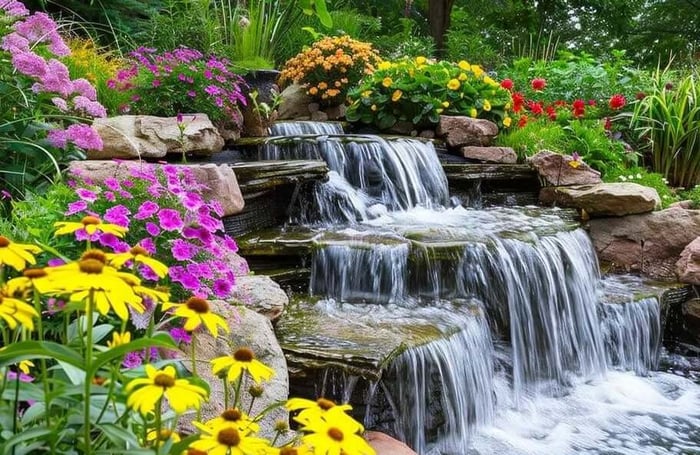
Thinking about adding a waterfall to your backyard pond? Whether you’re aiming for serene beauty, the calming sound of falling water, or better filtration, this guide has you covered. You can achieve all three—but first, it helps to define your goals and choose the right setup for you and your pond.
Waterfall Styles: Landscaped Waterfall vs. Waterfall Box
There are two primary ways to add a waterfall to your pond:
- Landscaped Waterfall – This is a more natural, cascading design built with liner, dirt and rocks.
- Waterfall Box (Standalone) – A simpler option that places a waterfall box at the edge of your pond.
Each has its own benefits, costs, and installation requirements. Let’s explore both so you can decide what’s right for your pond.
Option 1: Landscaped Waterfall
A landscaped waterfall gives you that beautiful, natural look as water spills down a slope of rock and stone. Here's how to get started:
Step 1: Choose Your Location and Design
Decide where your waterfall will go and how tall and wide you want it to be. Estimate how much soil you’ll need to build up the elevation. Many pond owners use cinder blocks to form the base and reduce the amount of fill dirt needed.
Step 2: Gather Supplies
Before building, gather these essentials:
- Waterfall diffuser or box
- Tubing & fittings
- Pond pump
- Pond liner & underlay
- Decorative stones and boulders
- Waterfall foam (like EasyPro Black Waterfall Foam)
Pro Tip: Ponds with a submersible or pressurized filter could integrate a low profile waterfall diffuser at the top of the falls. The Eco-Series Diffuser from EasyPro is a nice option. These are available in four different sizes from 16” to 48” wide.
Step 3: Build the Structure
Start shaping your hill, tamping down stair-step levels for the water to cascade. Place your waterfall box or diffuser at the top and connect the tubing. Plan your tubing length based on the pump’s placement and the waterfall’s height.
Lay your pond liner over your waterfall structure. Make sure the liner on each side of the waterfall goes up at least several inches higher than the highest water level.
As water flows down a waterfall, it doesn’t always travel in a perfect, straight line. It can splash, shift side to side, or even back up during heavy flow or blockage. If your liner isn't high enough on the sides, water can sneak over the edge and leak out.
Continue positioning the pond liner by bringing it down into the pond, overlapping your pond liner slightly. Bring the liner in your pond up behind the base of the waterfall as well. You usually don’t need to seam these together. If you’re concerned about leaks, though, you can grab a seam kit here.
Step 4: Add Stones and Foam
Place your rocks and boulders on the fall, using underlayment as a sling for easier placement. For larger boulders contact a contractor. Once the rocks are in place, use waterfall foam to seal any gaps to help redirect falling water over the stones rather than around and behind them.
Step 5: Turn It On
Once everything’s in place and the connections are secure, turn on your pump and enjoy the flow! If necessary, reposition any stones that haven’t been foamed for adjusting water flow. Sit back, relax, and admire your work.
Pond Waterfall Ideas: If you'd like ideas for designing your waterfall, see our post on pondless waterfalls. You can bypass the pondless details, but the ideas for waterfall structures may be helpful.
Option 2: Waterfall Box at the Pond’s Edge
For something simpler and less labor-intensive, a standalone waterfall box is a great choice. While you can definitely build a landscaped waterfall, this is an easier diy pond waterfall. And you still get the sights and sounds of falling water!
How It Works
Place the box at the pond’s edge so water flows directly into the pond. Blue Thumb’s waterfall boxes are a great choice.
Installation Tips
Just like with the landscaped waterfall, bring liner up around the box to prevent leaks. You’ll likely want to add some plants, dirt, or stone around the box to help blend it into the landscape.
Bonus: Built-in Filtration
Waterfall boxes also serve as filters—offering both mechanical and biological filtration. To take full advantage of biological filtration, add filter media like bioballs (usually sold separately). Koi and any other pond fish will appreciate the extra filtration.
Summary
Adding a waterfall enhances your pond’s beauty, soundscape, and even water quality. Choose between a natural, landscaped waterfall or a simple waterfall box setup depending on your time, budget, and aesthetic preferences. Either way, you’ll bring new life and energy to your water feature—and your backyard.